
The history of AMD’s relationship with Linux is long, complex, and ultimately transformative.
Evolving from early struggles with driver support to becoming one of the most open and Linux-friendly hardware vendors today, AMD really shows us the way forward.
In the 1990s, as Linux gained traction, AMD’s CPUs were fully compatible with Linux — just as Intel’s were — because Linux already supported x86 instruction sets.
AMD didn’t need special Linux drivers for CPUs; they just worked. The challenges came later with GPUs after AMD’s 2006 acquisition of ATI Technologies.
AMD acquired ATI in 2006 for its Radeon graphics line. This began AMD’s direct responsibility for GPU support on Linux.
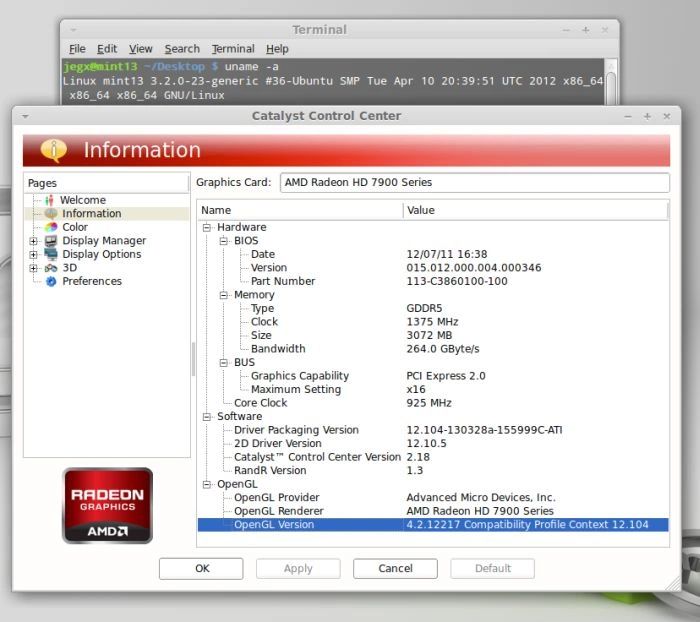
The fglrx driver was notorious for poor performance, delayed kernel compatibility, and instability.
Linux gamers and professionals often avoided AMD GPUs due to poor driver support compared to NVIDIA, whose proprietary drivers were more stable (though equally closed-source).
Around 2012, AMD began collaborating more actively with the open-source community.
They started releasing hardware documentation to help improve the open-source “radeon” driver.
AMD contributed directly to the Mesa 3D and DRM/KMS (Direct Rendering Manager / Kernel Mode Setting) subsystems in the Linux kernel.
The AMDGPU driver launched with the GCN (Graphics Core Next) architecture and became part of the mainline Linux kernel.
The open-source Mesa drivers (RADV for Vulkan, RadeonSI for OpenGL) matured quickly, often outperforming proprietary solutions.
The AMDGPU-PRO hybrid model allowed enterprise users to get official support, while most Linux distributions defaulted to fully open drivers.
AMD became a top contributor to the Linux graphics stack, collaborating closely with Red Hat, Canonical, and Valve (for Steam/Proton gaming improvements).
Ryzen CPUs (2017) brought strong Linux compatibility, often outperforming Intel in open workloads.
Early BIOS/firmware issues (like power management) were quickly resolved with kernel patches.
Steam Deck (2022), built on AMD hardware, runs SteamOS (based on Arch Linux), a landmark moment showing AMD’s full Linux compatibility for gaming and consumer hardware.
AMD is now one of the strongest Linux supporters in the hardware industry.
Their GPU stack is nearly 100% open source (kernel driver, Mesa userspace, Vulkan driver).
AMD actively contributes to:
* Linux kernel
* Mesa 3D
* LLVM/Clang
* ROCm
* Wayland and display stack development
Enjoy #linux
Well, that was exciting. See you in the next one!