
This is one of my favorite books.
I highly recommend it.
The Castle by Franz Kafka
Project 'Read a Book'
The, Castle, Franz, Kafka, Project, Read, Book, List
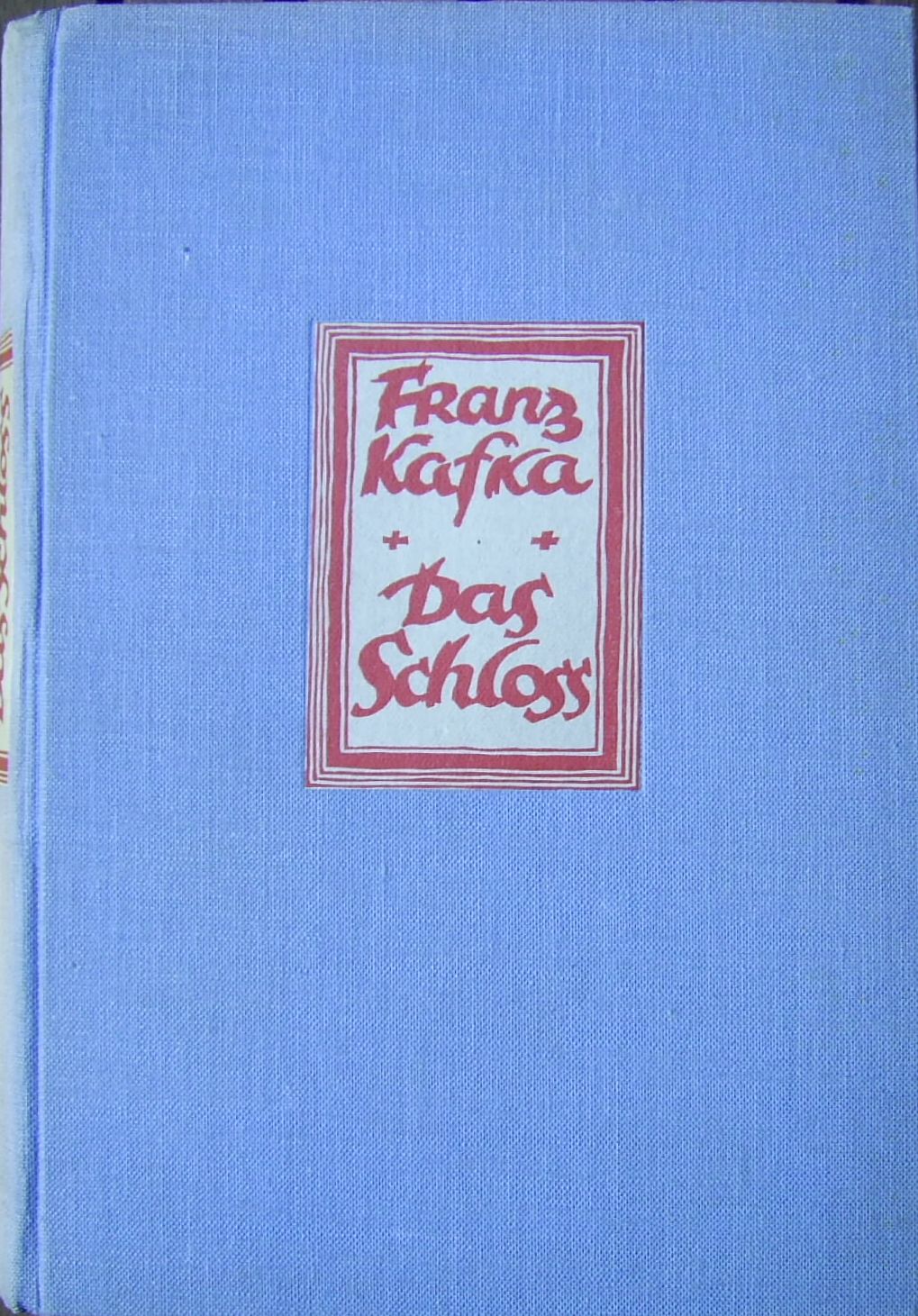
The Castle by Franz Kafka
The Castle by Franz Kafka
Summary of The Castle
The_Castle_(novel): https://en.wikipedia.org/wiki/The_Castle_(novel)
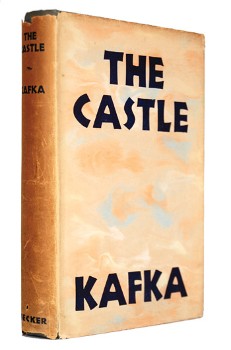
Franz Kafka’s The Castle tells the story of K., a land surveyor summoned to a remote village dominated by an inaccessible and opaque bureaucracy centered in the looming Castle.
Upon arrival, K. finds that no one seems to know who called for him—or if he was ever truly needed.
The Castle is never fully seen, its officials rarely encountered, and its workings maddeningly contradictory.
K. battles isolation, miscommunication, and institutional absurdity as he tries in vain to gain recognition and permission to belong.
He is entangled in futile dialogues, strange social rituals, and increasingly desperate attempts to assert his identity in a world where logic crumbles and authority is spectral.
Kafka died before finishing the novel, and fittingly, K.’s struggle ends unresolved, suspended in ambiguity—a purgatory of uncertainty and yearning.
Favorite Character
Amalia
Amalia is one of the most tragic figures in Kafka’s shadow-haunted village.
Once a respected young woman, her entire family falls into disgrace when she refuses the advances of a powerful Castle official named Sortini.
She tears up his lascivious letter and hurls the pieces out the window, a silent act of defiance against faceless authority.
But in Kafka’s universe, dignity comes at a terrible cost.
Her refusal is seen not as moral strength but as an affront to the Castle's mysterious social order.
Overnight, the family becomes pariahs.
Amalia, once vibrant and full of life, becomes a spectral presence in her own home—withdrawn, hollowed out, as if her integrity was both her triumph and her doom.
Kafka makes her a martyr to a cruel and unseen power, a woman punished for saying “no” when silence would have been safer.
She is tragic not only for her suffering, but because no one—neither the village nor the Castle—will ever admit she was right.
Olga
Olga is Amalia’s sister, and she bears the burden of resistance in another way: by refusing to disappear.
While Amalia retreats into silence, Olga becomes the family's voice and servant, trying to mend their shattered social standing.
She sacrifices everything to navigate the opaque systems of favor and punishment that rule the village, humbling herself before petty officials, running errands, enduring humiliation—all for the faint hope of redemption.
Olga’s tragedy is that she keeps fighting, even as the battle deforms her.
She becomes hardened, shrewd, bitter, all while clinging to the belief that if she can just do enough, someone might forgive them.
But the Castle offers no forgiveness.
Olga's devotion is heroic and heartbreaking—an effort to buy back a life that was never hers to lose.
Barnabas
Barnabas, the brother of Amalia and Olga, is a messenger for the Castle—but even this role is cruelly ironic.
Though he serves the system that destroyed his family, he has no real power, no true connection to the authorities he supposedly represents.
His messages are meaningless, his duties opaque.
Like K., Barnabas is caught in a labyrinth where words no longer convey truth and every action deepens the absurdity.
He tries to serve, to be worthy, to rebuild what was lost, but he is forever on the outside—used and discarded, visible only when convenient.
His quiet compliance is tragic in its futility, and his presence reminds us that in Kafka’s world, loyalty offers no safety, and service no salvation.
In The Castle, Kafka conjures a world where human dignity is measured against an unknowable, indifferent power—and always found wanting.
Amalia, Olga, and Barnabas are not merely side characters in K.’s story; they are his mirrors, fractured and raw.
Through them, we see the many faces of resistance: the silent defiance that leads to exile, the tireless labor that yields only deeper entrapment, the meek obedience that still brings ruin.
Their lives are shaped by a system that demands everything and offers nothing, a place where guilt is assumed and absolution is impossible.
And yet, even in their suffering, they remain heartbreakingly human—reaching, enduring, grieving.
It is this quiet, unyielding sorrow that gives The Castle its devastating beauty: not the tragedy of failure, but the tragedy of persistence in a world where hope is a burden too heavy to carry, and too sacred to put down.
The Castle is not a story of resolution but of erosion—of how people are slowly worn down by silence, by systems too vast to understand, and by the lonely ache of being unheard.
In Kafka’s village, to seek meaning is to suffer, and to resist injustice is to vanish beneath it.
Yet within this bleak terrain, there is something stubbornly luminous in the figures of Amalia, Olga, and Barnabas.
Their lives may be marked by exile, shame, and futility, but their refusal to surrender fully to despair is what lingers.
They remain—damaged, yes, but still present.
In Kafka’s cold, bureaucratic world, that presence is a quiet form of rebellion.
And perhaps that is the most tragic truth of all: that even when no one is watching, even when the Castle never answers, they keep trying to live with dignity.
In the end, The Castle is not about gaining entry.
It is about the haunting nobility of those who never stop knocking.
About the Project
Project 'Read a Book'

Project 'Read a Book'
Reading a full book is beneficial because it fosters deep focus, critical thinking, and emotional stability, unlike the fragmented information often consumed in short bursts online.
Immersing oneself in a book enhances cognitive functions such as comprehension, memory, and empathy by encouraging readers to engage with complex narratives, diverse perspectives, and sustained storylines.
It also provides a sense of accomplishment and mental clarity, allowing individuals to disconnect from daily stress and build a more reflective, informed worldview.
See you in the next one!
If you wish to support our project
Donation link (Buy me a coffee):