
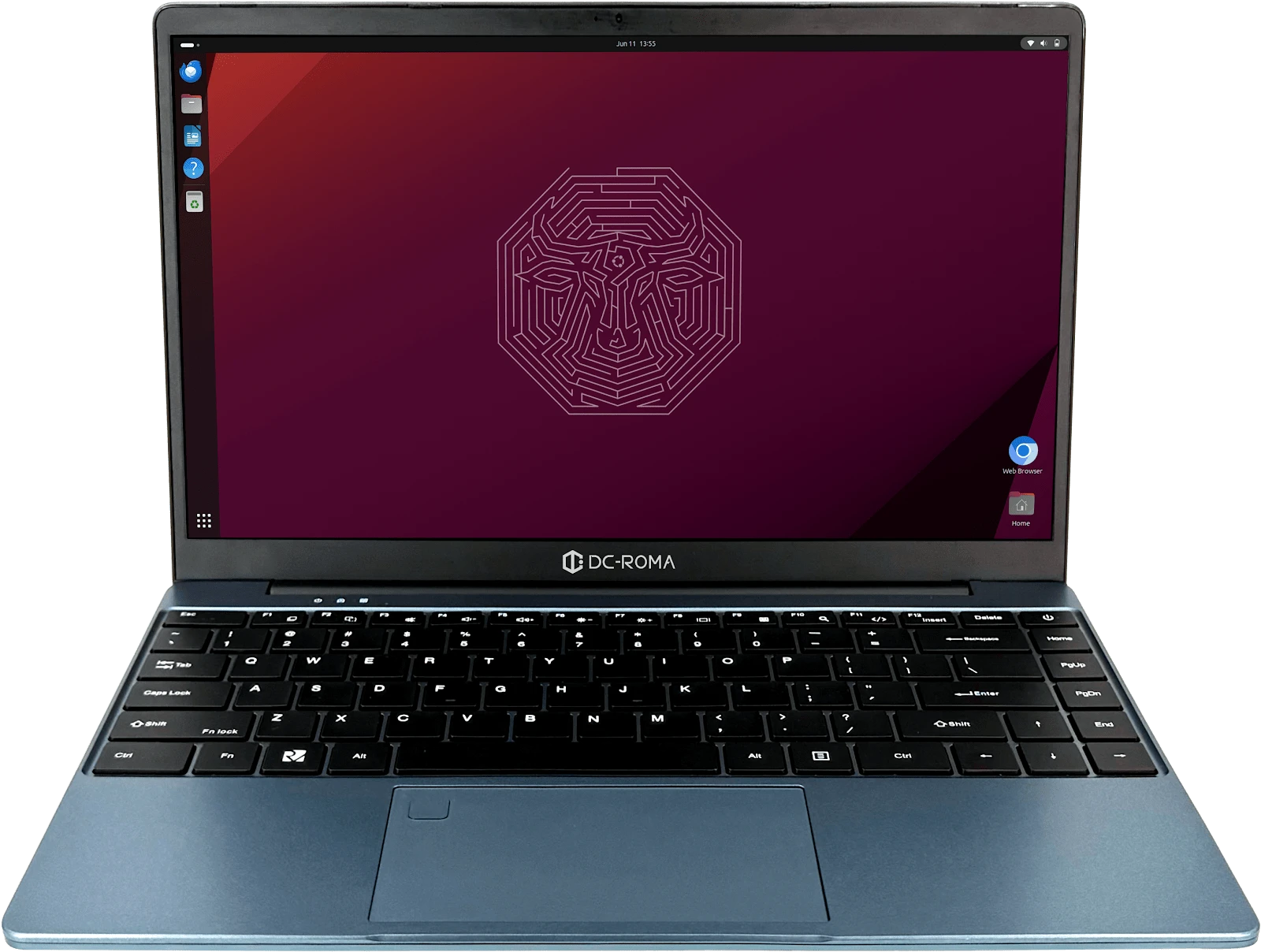
A RISC V computer
A RISC-V computer is a computing system—such as a desktop, server, embedded device, or even a microcontroller—that uses a Central Processing Unit (CPU) based on the RISC-V Instruction Set Architecture (ISA).
To understand the computer, you must first understand the ISA:
RISC-V stands for Reduced Instruction Set Computer - Five.
Unlike proprietary ISAs like x86 (Intel/AMD) or ARM, RISC-V is an open and free ISA.
This means that any person or company can design, manufacture, and sell RISC-V chips and software without paying royalties or licensing fees.
The ISA has a small, mandatory base integer instruction set (either RV32I for 32-bit or RV64I for 64-bit) and then defines a set of standard extensions (like 'M' for multiplication, 'A' for atomics, 'F'/'D' for floating-point).
This modularity allows designers to tailor the CPU exactly to the required application, from tiny embedded sensors to massive supercomputers.
It adheres to the fundamental principles of RISC design:
Each instruction performs a very simple operation.
Instructions are typically 32 bits long, simplifying the design of the instruction decoder.
It uses a large number of registers to minimize memory access.
Characteristics of a RISC-V Computer
Open Source Hardware
The core design (the ISA) is not owned by a single company.
Allows for full auditing and verification, making it ideal for high-security applications.
Customization
Designers can choose only the necessary extensions.
Leads to smaller, more power-efficient chip designs for specific tasks (e.g., IoT devices).
Vendor Independence
The ISA is governed by the non-profit RISC-V International organization.
Fosters a competitive ecosystem where multiple vendors can create compatible CPUs, potentially lowering costs and increasing feature variety.
Longevity
The ISA is fixed and stable.
Guarantees that software and compilers written for it today will continue to work on future RISC-V hardware.
A RISC-V computer is defined by its foundation:
a CPU based on an instruction set that is open, highly flexible, and free for all to use and implement.
This contrasts sharply with computers whose CPUs are built on proprietary ISAs.
Well, that was exciting. See you in the next one!