
This is a featured article used with permission from the original author.
Please see the 'About the Author' section at the bottom of this page.
Shawn Wilson
Linux/Unix people
Unix Dev*Ops Engineer
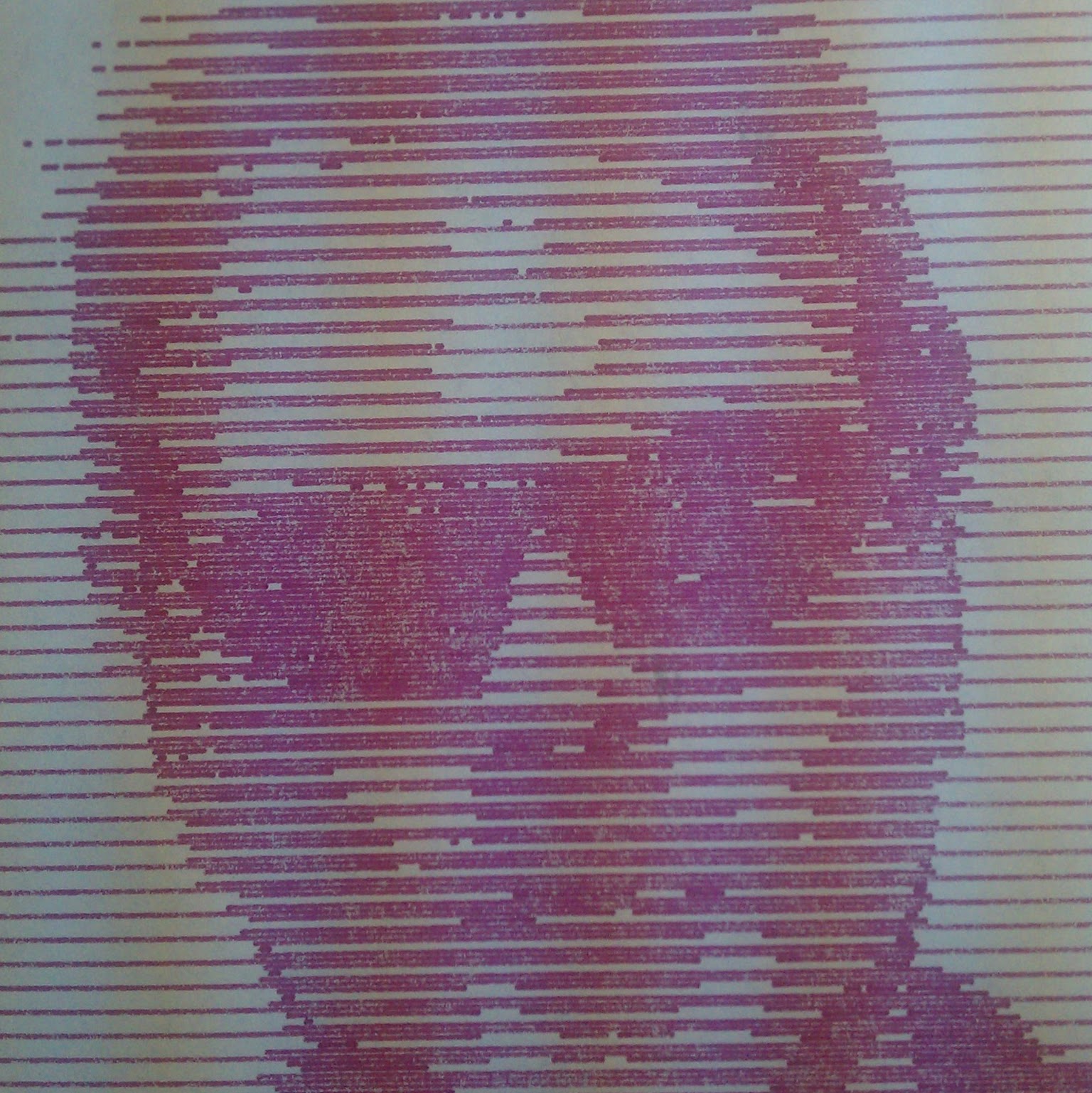
Shawn Wilson
This is a short autobiography about my journey into tech.
I'm not that old but seem to have some interesting experiences (compared to how we live today anyway).
So I'm going to recall some snapshots in time to introduce technology to you.
Life #1 (ca. 1986-1992)
I think I grew up at about the best time - in the 90s.
We had computers, but they weren't everywhere - you had to want to use them - they weren't a required aspect of living in society yet.
This was also the period where US schools pretty much stopped having drills where you hid from a nuclear strike by crouching under your desk, but before they had drills where you hid from an "active shooter" in a closet.
We had decently fast modems - I could pull up images, but they resolved line by line (like a printer would print them).
We had BBSs you could dial into (and later telnet to), but also AOL chatrooms, and eventually MSN NetMeeting with Zoom like features (though laptops didn't come with a camera or microphone, so you had to buy + install + configure them).
When I was around 4 years old (and didn't know what a computer was) my grandmother bought a Tandy 102 (and later a Tandy 200).
I don't remember using those computers much - and really, there's not much you could do with those Tandy computers other than write documents and program.
After this, I remember playing a few games on a computer where my mom worked - banna.bas and nibbles.bas (a version of nibbles was also popular on Nokia phones a decade later).
My first real experience using a computer was on my grandmother's 386 from Sears which I played Treehouse and some math game on - that computer eventually got Windows 3.11 on it.
Ironically I don't think that 386 was ever connected to another computer whereas the Tandy bought >5 years prior connected to other computers a lot.
After the 386, we got a "word processor" at home - a machine just intended for typing and printing documents - and that's it. Sometime after this, I learned to type...
When I was in 2nd or 3rd grade, I remember there being a single computer for a pod of 4 teachers - each teacher/classroom had 20~30 kids - so 1 computer for 120 people in school in the late 80s.
By the early 90s, I'd go to a school that had Apple //e computers with games to teach you how to type (they also had a "computer class").
The typing instruction was basically a space invadors game that had you shoot by typing a letter - this worked quite well for me.
After learning to type, I was introduced to the internet and some computer theory - both because we got a 486 PackardBell with a 2400 baud modem at home and because kids in school were interested in computers.
So I went from 1 computer for 120 people that no one really knew how to use to being asked to use a computer for at least an hour a day to learn to type within 2 years.
Hack #1 (ca. 1993-1997)
In those days (soon after we got a PackardBell), I realized that AOL would send anyone and everyone as many 3.5 floppy disks as they asked for (1 per phone call).
These disks had the write protection tab removed, but that could be reversed by wadding up a piece of notebook paper and sticking it in the hole.
Our PackardBell came with a 540 MB disk drive, so each call to AOL would increase my storage capacity by ~0.3% and would hold lots of midi files, a minute wav file, or a copy of most software I wanted (MP3 files wouldn't exist for another ~5 years).
This storage medium was so popular that a decade later it was still popular to break up pirated rar files into 1.4 MB parts, and you could even get Windows 95 on floppy.
Eventually AOL would limit the number of free floppies you could order per week (and then stopped shipping floppies altogether and moved to only shipping CDs which were useless to me).
By that point Prodigy and CompUServ and similar wanted to send you free floppies too, so until everyone moved to shipping CDs, I got tons of free storage via junk mail.
Hack #2 (ca. 1996)
PackardBell hardware was notoriously bad.
However all of their models had very similarly bad hardware.
This also allowed for free Operating System upgrades.
The one thing PackardBell did that I liked was send you free recovery CDs if you called them up, convinced them the Operating System wouldn't boot and that you'd lost your recovery CD.
They'd send you a recovery CD for whatever hardware you had the serial number for, and that CD was an OEM Windows install CD (with their bloatware) - there was no verification of hardware it was being installed on.
So obviously, I found someone with a newer PackardBell, asked them for the serial number of that computer (assured them nothing bad would happen), called PackardBell, and got them to ship my "lost" recovery CD.
I then recovered my old computer to the newer OS.
That system wasn't very useful though, and I wanted a Linux system...
Life #2 (ca. 1986-1992)
In between being able to upgrade Windows on our home PC and learning Linux, I remember spending a summer at my grandmother's house.
She had a slightly faster computer than the one we had at home - I think it was 99mhz - a Pentium.
But what really made the experience was having a faster modem in the computer.
RealMedia's RealPlayer had taken off for broadcasting media to computers and NASA TV (or at least parts of it) were online then.
NASA had launched a rover that used airbags for its final landing and they'd published animated video of this.
I was able to download this and watch it.
She also had a futuristic puzzle game that came with her computer that was pretty fun.
And I was able to go to her work with my floppy disks and download media (midi, wave, and Real Media files) to take home.
Our old 486 home PackardBell probably had more operating systems than most computers do.
It came with/had Windows/DOS, dual booted Slackware (and ZipSlack), BeOS, and maybe OS/2 at some point.
Eventually, I'd try to upgrade the hard drive on it, had issues getting it to show up and unplugged it when the computer was still on and saw a pretty cool looking spark shoot out of it.
It ended life then.
I suspect the issue with my upgrade was not using the screws that came with the drive and picking up some wood screws to secure it - that disk was probably dead before anything was able to process the primary/slave jumper selector.
After that, we got an eMachines - those computers possibly had even worse hardware - they both ran Doom II and got online though - and I think it came with a game called MegaRace with a talk show style host called Lance Boil that was pretty fun as well.
My next computer was a PII 250mhz SuperMicro P6DBE.
I think my mom found a computer building company called Nerdoes that built that computer for me.
That company put together a really solidly built computer.
The SuperMicro ran Linux natively for all of its life.
I got Win4Lin and WineX/TransGaming on it at times.
But I don't remember anything other than a Linux kernel booting it.
I learned a lot with that computer.
How to go through a kernel config and find what hardware I had that should be enabled.
I learned how to configure video drivers and X Windows, how to configure sound and networking, patching a kernel.
I learned how expensive SCSI cables were compared to IDE as well as how to handle that different bus.
I installed and upgraded multiple CD burners and Iomega Zip drives.
Hack #3 (ca. 1998)
I used to talk to former classmates over Unix talk (especially ytalk).
One day, someone convinced me they were someone else and wanted to help me out.
I don't remember whether this was getting sound working or something else.
But they convinced me to give them my root password.
They then simply logged in and typed "rm -rf /" and made the system unbootable (technically, this probably wouldn't remove most data on a classic system since bash and rm would've been in /bin, but it would remove enough to make it unbootable).
I learned lots of lessons from this.
Most importantly: don't trust anything on the internet - it's hard to know if it's there to help or hurt you.
Hack #4 (ca. 1999)
Through an amateur radio club, I was given a shell account on a Linux box.
This was hosted at a small internet provider one of the club members (Doug) owned that was connected to a full T1 line.
Some time later, a friend (Tommy) annoyed me, so I decided to take him offline.
I started a ping flood, put it in the background, and let it run.
The next call I had was from Doug, the owner of the computer I had a shell account on.
It turned out that Tommy was at a technical school that only had a partial T1 and whose phones were on that same link.
So my ping flood had taken out both their internet (apparently they needed to give some refunds for tests people were taking) and their access to a telephone to call anyone to stop it.
Someone at the school had to drive a few minutes to a gas station to call their internet provider.
Tommy's school's internet provider then made a call of their own to Doug's upstream internet provider.
Doug's provider then called him to stop the ping process.
I then got a call from Doug (and a bit later from Tommy) who both told me what had happened.
I don't think I realized how bad that little exercise was until years later.
I now don't recall what annoyed me that made me think to do that - I actually didn't think anyone would notice - maybe things would slow down slightly.
Some years later someone would make a "low orbiting ion canon" project to achieve what I'd done with a user level shell account on a T1 line.
Through this, I learned that I would often have access to powerful systems that I could easily abuse and should understand the impact any misuse could have.
Life #3 (ca. 2000-present)
I didn't really learn to program until ~2005 or so when I started to pick up bash (mainly to stop, move, and boot VMWare ESX guests) - this turned into learning Perl by 2010.
I picked up Perl in order to scrape a website for maritime vessel data.
I learned a lot from picking up Perl.
I've continued that programming/scripting journey to this day.
I think everyone should learn programming/scripting languages.
Maybe an interest in programming isn't where you start - for example, I needed to learn how to type first (I don't think knowing to type is going to be a prerequisite for long) and maybe there are other prerequisites to learning to program today.
I'm ending this back story here as the next part of my life seems less like learning and more like doing and there are technical posts that cover the interesting bits already.
A career if you will.
There's also many stories about working places.
Maybe you work in a field for money and maybe you work somewhere because you enjoy it.
I think childhood experiences are a big factor in whether you enjoy your work or whether you just try to climb the ladder.
We don't have much decision in what resources we're exposed to growing up, but we can impact the resources others are exposed to.
I remember (possibly more than most) those who had impact on my education (both good and bad) growing up.
But I don't know of as many articles about people growing up with tech, so hopefully this is an edge case I can cover here.
The Future
Over the years, I've seen concepts get more compartmentalized.
I remember a boss giving a company wide presentation 15 years ago and he said something to the effect that "we're implementing virtual LANs, virtual machines, and virtual SANs".
I remember thinking that sounded like salesman BS at the time (and I still feel this way).
But since then, we've definitely kept growing layers on top of compute.
We have hardware hypervisors (VMWare, Xen, cloud EC2, etc) supporting containers (mainly containers/OCI - Docker, Kubernetes, LXC, jails).
I suspect this trend continues by moving into more slim containers and then unikernel platforms.
I believe we will see unikernel offloading into ASICs on cards - I think we've started seeing this with network cards that can offload eBPF XDP, and this trend will expand immensely with modern machine learning tasks (beyond autopilot PID hardware).
I suspect needing efficiency in humanoid robots will spur lots of custom compute ASICs.
I also suspect the energy needs of humanoid robots will reduce the size of SMRs (small modular reactors) which should become more useful than batteries in a few decades.
I have two pieces of career advice - the first should be obvious: don't let the future scare you from doing something.
But the second might be a bit less obvious and require some explanation and is a quote from the inventor of the rubik's cube - "if you are curious, you'll find the puzzles around you".
Find the puzzles that are the most fun to you - maybe don't just get addicted to one all of a sudden, but find a few and let the one that's the most fun and entertains you the longest bubble to the top on it's own, then figure out how to make a career out of it.
I think a warning or caveat should go here: the quote was "find the puzzles" - don't think to take someone else's games or puzzles and make them your own - don't think of a video game as a puzzle (or a basketball game, or football, etc) - if you do, you are at the mercy of others to recognize your talent vs you being able to pursue a thing.
The first blackberry was introduced 26 years ago.
It was just an email device and is used more similarly to how I use a phone now than how I used my startak then or my iphone 3g a decade later.
I suspect the change we're going to see over the next 25 years will make the change we saw over the last 25 years look pitiful.
I suspect that we'll see artificial general intelligence (AGI) in that time - and not just in supercomputers, or even phones, but in our watches and vacuums - not because they're necessary for these devices to work better, but because once we have AGI chips, the obvious sales pitch will be "AGI inside" (instead of "Intel inside").
We'll have more universally wearable augmented reality (AR) devices - and not because this will make humanity better or happier, but just because companies are throwing lots of money at the problem.
And I suspect we'll have pretty impressive brain computer interfaces (BCI) over this time as well.
I don't think we've seen the start of the S-curve to get into space yet, but suspect this will start in the next decade or so.
As well, 3D printing and materials science hasn't really taken off yet, but is prone to do so soon.
While Zipline (a logistics company) and the Ukraine war have both shown novel use of drones, we have yet to see that industry really take off yet either.
I hope that as we make faster and faster advances, we all become even more curious.
I also hope you were at least a little entertained reading this and maybe became at least slightly more curious in the process.
Good luck.
I have more technical blog posts on my site:
https://ioswitch.dev
and some projects on my github account:
https://github.com/ag4ve
You should expect all of my git commits to be signed (I have other github accounts for commits that aren't signed).
License: CC-by-SA
About the Author
Shawn Wilson - Senior DevOps
Shawn Wilson
For LinkedIn Profile Click here
Unix Dev*Ops Engineer
I engineer computer systems.
I’ve worked in AWS and some Azure - but I’ve also managed hardware in racks (and cabling).
I’ve written thousands of lines of ruby, and perl, and bash, and some python - but I’ve also configured an HSM and setup/deployed/managed Hashicorp VaultFor fun, I’ve built/used 3D printers, play with both DSLR and C-mount cameras, amateur radio operator, etc.
Skills:
Unix
Unix Shell Scripting
Perl Script
Perl Automation
Perl
Object Oriented Perl
JavaScript
Nmap
Metasploit
Python
Zsh
SSH
DBI
MySQL
Mac OS X
Vim
Iptables
Firebug
xmonad
Windows Server
Active Directory
EMC Storage
EMC Celerra
VMware
VMware ESX
Xen
Linux KVM
KVM
KVM Switches
ILO
DRAC
VirtualBox
Virtualization
Bash
Linux System Administration
RedHat
Debian
GIS
Cisco IOS
ZFS
Node.js
MongoDB
Nginx
Mod_perl
TCP/IP
Firewalls
Open Source
Networking
Software Development
Shell Scripting
See you in the next one!
If you wish to support our project
Donation link (Buy me a coffee):