
This is one of my favorite books.
I highly recommend it.
Ion by Liviu Rebreanu
Project 'Read a Book'
Ion, Liviu, Rebreanu, novel, history, Project, Read, Book, List
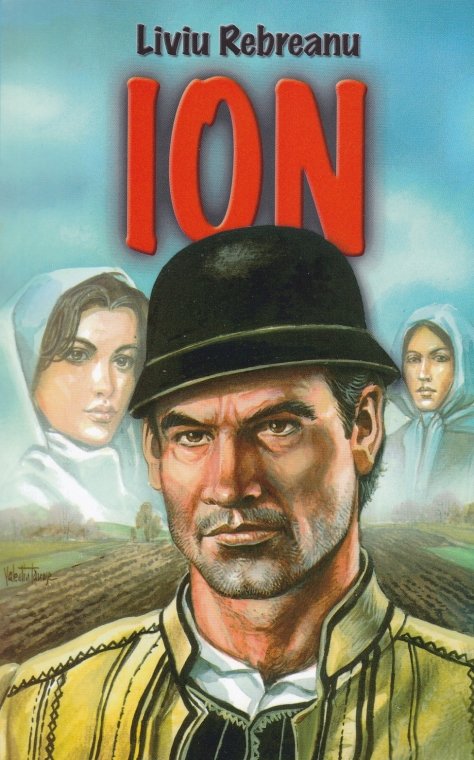
Ion by Liviu Rebreanu
Ion by Liviu Rebreanu
Summary of Ion
Ion: https://ro.wikipedia.org/wiki/Ion_(roman)
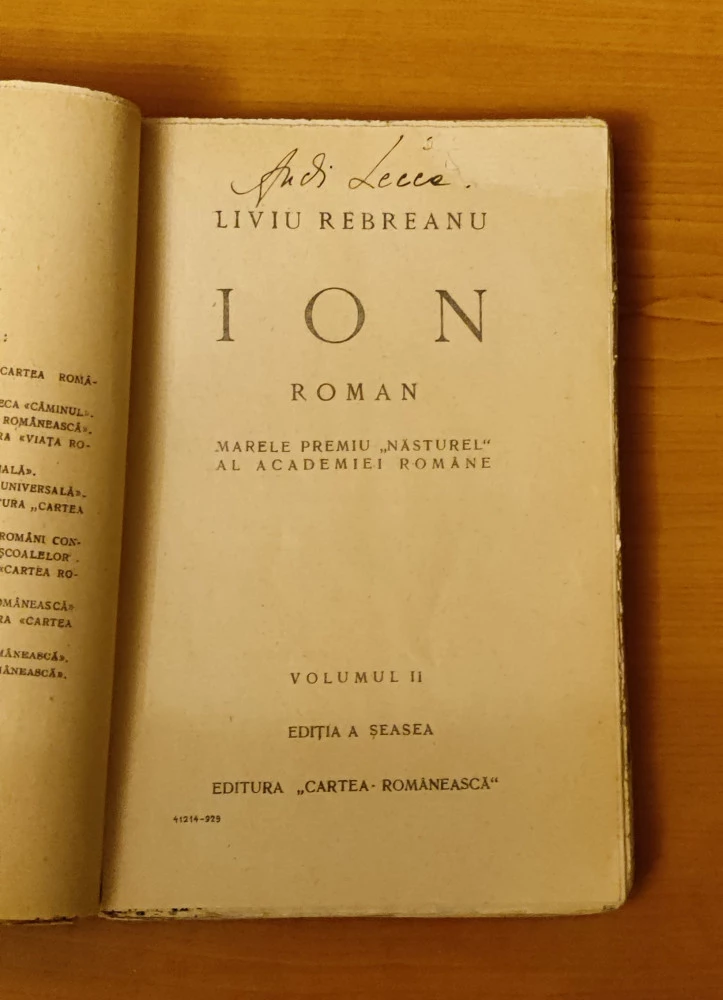
Liviu Rebreanu's "Ion" is considered one of the most important Romanian novels, offering a deep and realistic portrayal of Transylvanian rural life at the beginning of the 20th century, particularly focusing on the fierce struggle for land, which determined social status in that society. The novel is structured in two main parts: "The Voice of the Land" and "The Voice of Love," reflecting the protagonist's conflicting desires.
Part I: The Voice of the Land
The novel opens with a vivid description of a Sunday hora (traditional dance) in the village of Pripas. We are introduced to the villagers and the social hierarchy, where wealth, especially land ownership, dictates respect and standing.
The central character is Ion Pop al Glanetașului, a young, intelligent, and ambitious peasant, but poor. He is passionately in love with Florica, a beautiful girl from a poor family. However, his overriding desire is for land. He feels deeply humiliated by his poverty and yearns for the respect and status that comes with owning significant property.
Ion sees his path to wealth through Ana, the plain and rather unattractive daughter of Vasile Baciu, the richest man in the village. Vasile Baciu is cunning and unwilling to part with his land. Ion, despite his feelings for Florica, begins to court Ana, meticulously planning to win her over and, through her, gain access to her father's vast estate.
Ana, desperate for affection and genuinely falling for Ion's calculated charm, becomes pregnant. This event is a crucial turning point, as it forces Vasile Baciu's hand. Despite his contempt for Ion and his suspicions about Ion's true intentions, the social pressure of an illegitimate child compels him to agree to the marriage and to give a portion of his land as dowry.
The wedding takes place, but it's far from a joyful event. Ion's true feelings for Ana are absent, and his focus remains solely on the land. He abuses Ana, verbally and physically, once he has secured his hold on the property. The act of finally possessing the land fills Ion with an almost mystical joy; he literally kneels and kisses the earth, feeling a deep, primal connection to it.
Part II: The Voice of Love
Despite having achieved his dream of land ownership, Ion's inner turmoil continues. The "voice of the land" has been satisfied, but the "voice of love" for Florica persists. He is now a wealthy man, respected by the community, but deeply unhappy in his marriage to Ana.
Ana, neglected and abused, falls into a profound depression. She realizes that Ion never loved her and that she was merely a means to an end. Her existence becomes unbearable, leading her to suicide by hanging herself in the stable.
Shortly after Ana's tragic death, their sickly infant son, Petrișor, also dies. This leaves Ion with the land, but without an heir, and the legal battle with Vasile Baciu over the inheritance re-ignites.
With Ana and Petrișor gone, Ion believes he is finally free to pursue Florica, who is now married to George Bulbuc, a respectable and well-off peasant. Ion's obsession with Florica intensifies. He begins to visit her secretly, reigniting their past passion.
One night, while Ion is with Florica, George Bulbuc returns home unexpectedly. He discovers them together and, in a fit of rage, strikes Ion multiple times with a hoe, killing him. Ion's death is sudden and brutal, a grim culmination of his relentless pursuit of land and love.
The novel concludes with the aftermath of Ion's death, emphasizing the cyclical nature of life in the village and the enduring power of the land. The community continues its existence, seemingly undisturbed by the individual tragedies, highlighting the idea that human lives are transient, but the land remains.
Throughout the narrative, Rebreanu also incorporates secondary storylines, such as that of the intellectual Herdelea family (the teacher Zaharia Herdelea and his children, including Titu and Laura), whose struggles reflect the broader social and political tensions in Transylvania at the time, particularly the Romanian desire for cultural and political autonomy within the Austro-Hungarian Empire. However, the core of the novel remains Ion's consuming ambition and its tragic consequences.
Favorite Characters
Ion Pop
Ion is the titular protagonist, a young peasant driven by an overwhelming desire for land. He is intelligent, ambitious, hardworking, and physically strong, but also ruthless and cunning. Initially in love with Florica, his deep-seated humiliation stemming from his family's poverty leads him to strategically pursue Ana, the wealthy but plain daughter of Vasile Baciu. He sees land ownership as the ultimate source of respect, status, and happiness. His acquisition of Ana's land fills him with an almost spiritual ecstasy, but it doesn't bring him inner peace. He abuses Ana, verbally and physically, once he has achieved his goal. Despite his wealth, the "voice of love" for Florica re-emerges, leading him to pursue her even after her marriage to George. His insatiable desires ultimately lead to his violent death at George's hands. Ion embodies the tragic consequences of unchecked ambition and the destructive power of a society where land is paramount.
Vasile Baciu
Vasile Baciu is the richest man in Pripas, a cunning, proud, and avaricious peasant. He is fiercely possessive of his land and deeply suspicious of Ion's intentions towards his daughter, Ana. He initially scorns Ion's poverty and prevents Ana from marrying him. However, when Ana becomes pregnant with Ion's child, Vasile is forced by social pressure and the desire to avoid public scandal to agree to the marriage and to cede some of his land as dowry. Despite this, he constantly tries to reclaim the land or dispute the inheritance. His character represents the entrenched power of wealth and the stubbornness of the old guard in rural society.
Ana
Ana is Vasile Baciu's only daughter, a plain, submissive, and rather naive young woman. Desperate for affection and believing in Ion's feigned love, she becomes a victim of his machinations. She is manipulated into pregnancy, leading to her forced marriage with Ion. Ana suffers immensely under Ion's neglect and abuse, realizing that she was merely a means to an end for him. Her life becomes a slow, agonizing descent into despair, culminating in her tragic suicide by hanging. Ana represents the vulnerability of women in a patriarchal society and the destructive impact of loveless marriages driven by material gain.
Florica
Florica is a beautiful, lively, and warm-hearted young peasant woman, initially in love with Ion. She is from a poor family, which makes her an unsuitable match for Ion's ambitions, despite their genuine affection. After Ion abandons her for Ana, she marries George Bulbuc, a hardworking and well-off peasant who genuinely loves her. Despite her marriage, her past feelings for Ion are rekindled when he pursues her, leading to the fateful encounter that results in Ion's death. Florica represents true, uncalculating love, but also becomes an unwilling catalyst for tragedy.
George Bulbuc
George is a respectable, hardworking, and honest peasant. He is well-to-do and deeply loves Florica, whom he marries after Ion abandons her. He is initially unaware of Florica's lingering feelings for Ion or Ion's renewed pursuit of her. When he discovers Ion and Florica together, his fury and sense of betrayal lead him to violently kill Ion. George represents the traditional, moral peasant, whose stable life is disrupted by Ion's disruptive ambition and illicit desires.
Characters from the Intellectual World (Herdelea Family and Associates)
Zaharia Herdelea
The village teacher and the patriarch of the Herdelea family. He is an educated and respected figure in Pripas, but struggles with financial difficulties and the bureaucratic injustices of the Austro-Hungarian administration. He is a Romanian nationalist at heart, trying to uphold Romanian culture and language in a Hungarian-dominated Transylvania. His story reflects the broader struggles of Romanian intellectuals and the subtle but persistent pressure they faced. He often tries to mediate conflicts and bring reason to the villagers.
Titu Herdelea
Zaharia Herdelea's son, an aspiring intellectual and a restless, somewhat idealistic young man. He is a law student who constantly grapples with his identity as a Romanian in Transylvania. He is critical of the peasant world's materialism but also recognizes its raw vitality. He has various romantic entanglements, including a brief affair with Roza Lang. Titu serves as a more intellectual observer of the village life and symbolizes the burgeoning Romanian national consciousness. He eventually leaves Pripas, seeking a more fulfilling intellectual and national purpose.
Laura Herdelea
Zaharia Herdelea's daughter, a cultured and sensitive young woman. She marries Pintea, a notary, in a pragmatic union that secures her future. Her story highlights the limited choices available to women, even those from intellectual backgrounds, in that society.
Aurel Ungureanu
A lawyer and an intellectual, a friend of the Herdelea family. He represents a more established figure in the Romanian intellectual circles, providing advice and support to Zaharia Herdelea in his legal battles and administrative issues.
Roza Lang
A sophisticated, somewhat melancholic woman who is Jewish. She has a brief affair with Titu Herdelea. She represents a different social and ethnic group within Transylvanian society and offers Titu a glimpse into a more complex, urban world.
Maria
Zaharia Herdelea's wife and the mother of Titu, Laura, and Ghighi. She is a pragmatic and resilient woman, constantly worrying about her family's financial situation and supporting her husband through his trials.
Avrum
A Jewish innkeeper in the village. He is a shrewd businessman, often involved in lending money and trading. He represents the Jewish community's role in the rural economy.
Aizic
Another Jewish merchant or innkeeper, often seen in the social fabric of the village, involved in trade and communal life.
Filipoiu
A peasant, often depicted in village gatherings and discussions, part of the general community.
George Pintea
The notary whom Laura Herdelea marries. He is a practical and somewhat unromantic figure, representing stability and social standing for Laura.
Toma Bulbuc
George Bulbuc's father, an elderly and respected peasant. He often offers advice and opinions within the village community.
Ilie Onu
A poor peasant, often sympathetic to Ion, or at least understanding of his struggle for land. He represents the plight of the landless in the village.
Virginia Gherman
A young woman from the village, potentially a love interest for Titu at some point.
Ghighi
The youngest daughter of the Herdelea family, still a child, providing a glimpse into the family's domestic life.
Nicolae Zăgreanu
Another villager, a peasant, part of the broader community often present in public scenes like the hora or church.
Ion Belciug
The priest of Pripas, a respected moral authority in the village. He represents the spiritual guidance and social order. He is often called upon to mediate disputes or offer solace.
Enduring lessons
The Destructive Power of Greed and Unchecked Ambition
Ion's insatiable hunger for land, fueled by a desire for status and respect, ultimately consumes him. While ambition can be a driving force for good, in Ion's case, it becomes a corrosive force that overrides all moral considerations, leading to manipulation, abuse, and ultimately, his violent demise. The novel vividly illustrates how material obsession can lead to moral bankruptcy and tragedy.
The Primal Connection to Land and its Social Significance
For the peasants of Pripas, land is not just property; it is identity, status, security, and even a spiritual entity. The novel powerfully demonstrates how land ownership determined one's worth and place in society. This emphasis highlights a universal truth about agrarian societies where the land is the fundamental basis of life and power, and how deeply rooted this connection can be.
The Conflict Between Material Desire and True Love/Happiness
Ion's struggle between the "voice of the land" and the "voice of love" is central to the novel. He sacrifices genuine affection for Florica and a potentially happy relationship for the sake of acquiring wealth through Ana. His subsequent unhappiness, despite having achieved his material goal, shows that true fulfillment cannot be bought or forced, and that neglecting emotional needs has severe consequences.
The Vulnerability of the Individual Against Societal Norms and Pressures
Ana's tragic fate underscores the limited agency of individuals, particularly women, in a society dominated by patriarchal customs and material concerns. She is used, abandoned, and ultimately driven to despair by the forces around her, highlighting the potential for individuals to be crushed by social pressures and the pursuit of others' self-interest.
The Cyclical Nature of Life and the Enduring Power of the Earth
Despite the individual tragedies and violent deaths (Ana, Petrișor, Ion), the village of Pripas continues its rhythm of life. The land remains, indifferent to human suffering, continuing to be plowed and harvested. This suggests that while human lives are transient and marked by their personal dramas, the fundamental forces of nature and the cycle of existence endure. It offers a stoic perspective on human impermanence against the backdrop of an eternal earth.
The Role of Social Status and Public Opinion
The novel subtly, yet powerfully, demonstrates how crucial social standing and the fear of public shame (e.g., Ana's illegitimate pregnancy) influenced decisions and actions. Vasile Baciu's hand is forced not by love for his daughter, but by the imperative to maintain his reputation and avoid scandal. This highlights how societal judgment can dictate personal choices, sometimes with devastating results.
The Challenges of Identity and Belonging (for the Intellectuals)
The storyline involving the Herdelea family, especially Titu, provides a counterpoint to the peasant world. It explores the struggles of Romanian intellectuals in Transylvania under Austro-Hungarian rule, dealing with issues of national identity, cultural preservation, and the search for purpose beyond material wealth. This adds another layer of human struggle, distinct from but interconnected with the peasants' fight for survival.
The Irony of Attainment
Ion achieves his greatest desire – land – only to find himself more miserable and ultimately dead. This serves as a cautionary tale about the illusion that material possessions will automatically bring happiness or fulfillment. The pursuit itself, if done without ethical boundaries, can be self-destructive.
"Drumul trecea acum peste satul tăcut și adormit, lăsând în urmă toate patimile, toate dorințele și toate zbuciumările."
"The road now passed over the silent and sleeping village, leaving behind all passions, all desires, and all turmoils."
Ion's violent death, Ana's suicide, the Herdelea family's struggles – all are absorbed back into the timeless rhythm of the village and the land. It speaks to the enduring power of the earth, which remains long after human passions and struggles have faded into silence, asserting its eternal presence over transient human lives.
About the Project
Project 'Read a Book'

Project 'Read a Book'
Reading a full book is beneficial because it fosters deep focus, critical thinking, and emotional stability, unlike the fragmented information often consumed in short bursts online.
Immersing oneself in a book enhances cognitive functions such as comprehension, memory, and empathy by encouraging readers to engage with complex narratives, diverse perspectives, and sustained storylines.
It also provides a sense of accomplishment and mental clarity, allowing individuals to disconnect from daily stress and build a more reflective, informed worldview.
See you in the next one!
If you wish to support our project
Donation link (Buy me a coffee):