
This is one of my favorite books.
I highly recommend it.
Baltagul by Mihail Sadoveanu
Project 'Read a Book'
Baltagul, Mihail, Sadoveanu, novel, history, Project, Read, Book, List

Baltagul by Mihail Sadoveanu
Baltagul by Mihail Sadoveanu
Summary of Baltagul
Baltagul: https://ro.wikipedia.org/wiki/Baltagul_(roman)
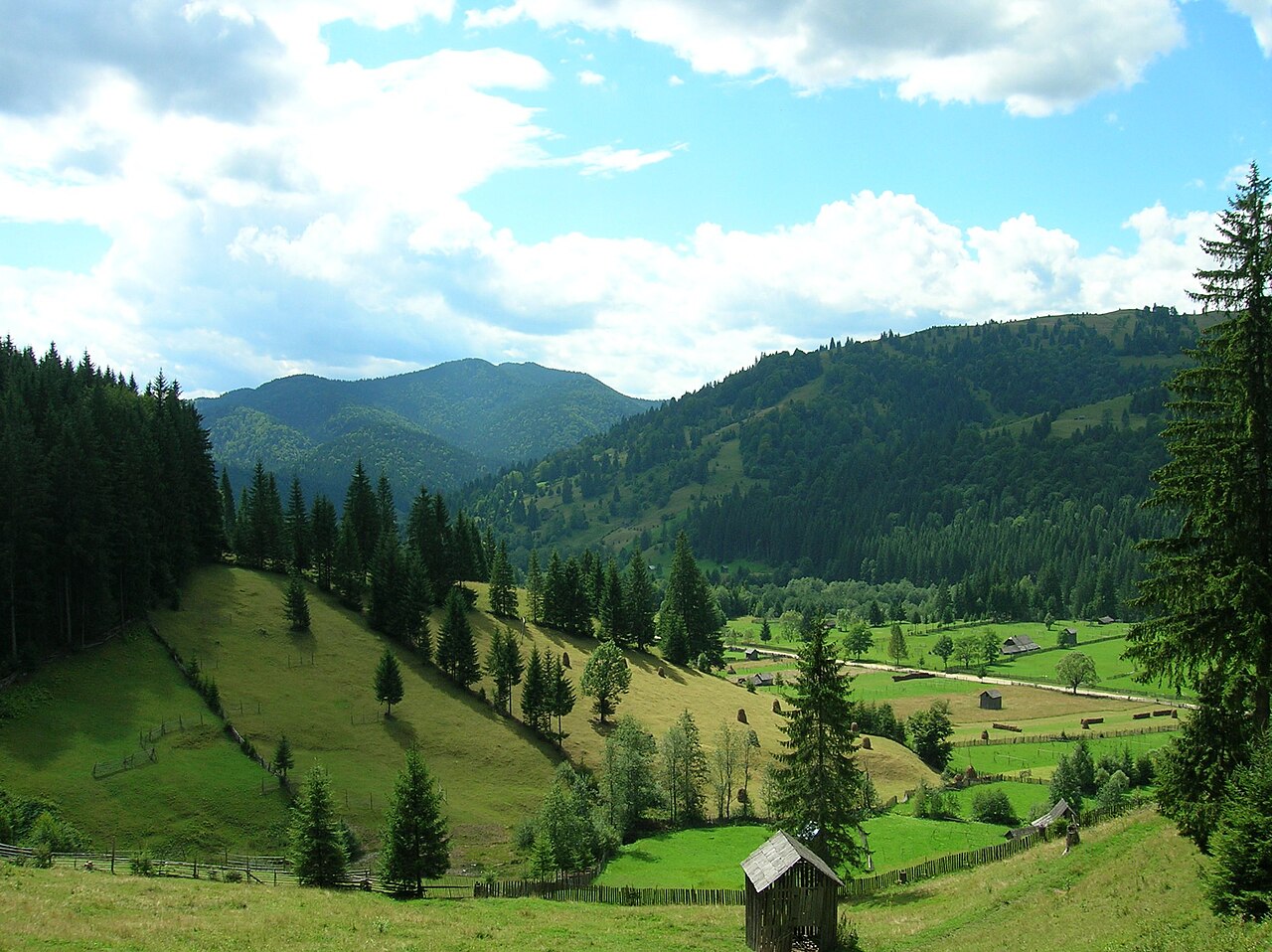
Mihail Sadoveanu's "Baltagul" (The Hatchet) is a crime novel set in the traditional Moldavian mountain villages, following the determined quest of Vitoria Lipan to uncover the truth behind her shepherd husband's disappearance and to avenge his death.
The story begins with Vitoria Lipan, a resilient and intuitive mountain woman from Măgura Tarcăului, growing increasingly worried about her husband, Nechifor Lipan. Nechifor, a wealthy shepherd, had left in the autumn to buy sheep in Dorna and had not returned for seventy-three days, which was highly uncharacteristic of him. Vitoria has unsettling dreams, particularly one where she sees Nechifor riding his horse into the sunset with his back turned to her, which she interprets as a premonition of his death.
Despite the reassurances of the local priest, Father Dănilă, and the superstitious advice of the village witch, Maranda, Vitoria's anxieties intensify. She decides that she must find him herself. Before embarking on her journey, she carefully prepares her household, entrusting her youngest daughter, Minodora, to a monastery, and making arrangements for the care of their home and remaining animals. She also contacts her son, Gheorghiță, who is away with the flocks in Jijia, asking him to return home and prepare to accompany her.
Vitoria, a shrewd and observant woman, meticulously plans her search. She knows her husband's habits and the routes he would have taken. Her journey with Gheorghiță becomes a symbolic quest, not just for a missing man, but for the restoration of order and justice in a world disrupted by an unknown tragedy.
Their path leads them through various mountain villages and towns, where Vitoria gathers clues by carefully questioning people her husband might have encountered: innkeepers, merchants, and other shepherds. She pays close attention to details, noting any inconsistencies or unusual behaviors. Her keen intuition and understanding of mountain life allow her to reconstruct Nechifor's last known movements.
She learns that Nechifor bought 300 sheep in Vatra Dornei and then sold 100 of them to two other mountain householders, Calistrat Bogza and Ilie Cuțui. As Vitoria and Gheorghiță continue their journey, they notice that Bogza and Cuțui, who live in the Doi Meri Valley, have suddenly become wealthier, and their wives more extravagant. This raises Vitoria's suspicions.
Her search takes a crucial turn when she finds Nechifor's loyal dog, Lupu, at a villager's courtyard. The dog, recognizing Vitoria, leads her and Gheorghiță to a ravine between Suha and Sabasa. There, they discover the frozen bodies of Nechifor and his horse, hidden beneath a pile of rocks. Nechifor's skull bears the mark of a hatchet blow, confirming Vitoria's fears of a violent death.
Vitoria, with the help of the local authorities, organizes a funeral feast for Nechifor. During the funeral rites, which are steeped in traditional customs, Vitoria cunningly sets a trap for the murderers. She arranges the feast in such a way that Bogza and Cuțui, the primary suspects, are present. Through a series of subtle yet pointed questions and observations, Vitoria gradually corner the two men.
The climax of the novel occurs when Vitoria, with calculated precision, recreates the scenario of the murder, accusing Bogza and Cuțui directly. She claims that Nechifor had told her about his travel companions and had given her instructions in case of his death. She implies that a third person was present and that Nechifor's hatchet, which he always carried, might still hold clues. Bogza, agitated and cornered, attempts to attack Gheorghiță, who, following his mother's unspoken command, strikes Bogza with Nechifor's hatchet (baltag), fatally wounding him. Lupu, Nechifor's dog, also attacks Ilie Cuțui, ensuring he doesn't interfere.
With the truth exposed and revenge exacted, Vitoria and Gheorghiță can finally bury Nechifor with dignity. The novel concludes with Vitoria looking ahead, ready to resume her life, but with the profound knowledge and burden of what she has endured and accomplished. "Baltagul" is not just a crime story; it is a deep exploration of tradition, justice, intuition, and the enduring strength of a woman in a harsh, yet deeply spiritual world. It draws heavily on the themes and atmosphere of the Romanian ballad "Miorița," transforming a lament into an active quest for retribution and reaffirmation of moral order.
Favorite Characters
Vitoria Lipan
The central protagonist of the novel, Vitoria is a resilient, intelligent, and deeply traditional mountain woman. Driven by an unshakable intuition and love for her husband, she embarks on a meticulous and relentless quest to find him after he goes missing. She embodies the traditional values and justice of the mountain people, using her cunning and knowledge of local customs to uncover the truth and avenge Nechifor’s death. Her character is a powerful representation of a woman's strength and determination.
Nechifor Lipan
Though he is absent for most of the story, Nechifor is a crucial character. He is a wealthy, respected, and experienced shepherd, known for his love of life, his generosity, and his deep connection to the mountain traditions. His sudden and mysterious disappearance is the catalyst for the entire plot. Vitoria's journey is a tribute to his memory and a quest to restore the moral order his death disrupted.
Gheorghiță Lipan
The son of Vitoria and Nechifor, Gheorghiță is a young man on the cusp of adulthood. Initially naive and somewhat timid, he is still learning the ways of his people. His journey with his mother is a rite of passage. He is a steadfast companion to Vitoria, and his character develops significantly as he witnesses his mother’s strength and ultimately carries out the act of vengeance, fulfilling his duty as a man and an avenger for his family.
Minodora Lipan
Vitoria and Nechifor's daughter, Minodora is a young woman who embodies a more modern outlook. She is less connected to the old traditions and customs than her mother. Her relationship with her mother is a bit strained at times due to these differences. At the beginning of Vitoria's journey, Minodora is sent to a monastery, which serves to protect her innocence and to allow Vitoria to fully focus on her quest.
Dănilă Milieș
The local priest from the Lipan's village. He tries to comfort Vitoria with religious platitudes and advice, but Vitoria finds his counsel unhelpful as her quest is driven by a deep, almost pagan sense of justice, not just faith.
Maranda
The village witch. She is one of the many people Vitoria consults at the beginning of her search, seeking a different kind of insight. Maranda’s superstitious rituals and cryptic advice offer Vitoria little practical help, reinforcing Vitoria’s reliance on her own intuition and logic.
Iordan
An old friend of Nechifor.
Arhimandritul Visarion
The abbot of the monastery where Minodora is sent. He offers a different kind of religious counsel and wisdom compared to Father Dănilă, but his presence primarily serves to highlight the contrast between traditional village life and monastic life.
David
A Jewish innkeeper. He and his family are some of the people Vitoria questions on her journey, demonstrating the diverse ethnic and social fabric of the region.
Donea
Another local innkeeper who provides clues.
Anastase Balmez
The mayor of Vatra Dornei.
Spiru Gheorghiu și Iancu Neculau
Two of the innkeepers Vitoria questions during her search for her husband.
Pricop
A shopkeeper who helps Vitoria.
Dumitru Macovei and Toma
The two shepherds who, along with Nechifor, were in charge of the flocks purchased in Dorna.
Iorgu Vasiliu
The police chief who helps Vitoria.
Calistrat Bogza
One of the two shepherds who murdered Nechifor. He is presented as a brutal, greedy man. His guilt is revealed through his nervous behavior and his sudden acquisition of wealth. Vitoria’s strategic questioning and his own aggression during the funeral feast ultimately lead to his demise at the hands of Gheorghiță.
Ilie Cuțui
The second murderer. He is the more submissive accomplice to Bogza. He tries to appear innocent, but Vitoria’s shrewd observations and his alliance with Bogza expose his involvement in the crime.
Ileana
Bogza's wife.
Gafița
Cuțui's wife. Their newfound wealth and more ostentatious lifestyle serve as a clue for Vitoria, as it is a behavior that goes against the humble traditions of their community.
Enduring lessons
The Power of Intuition and Instinct
Vitoria Lipan embodies the profound wisdom of intuition, especially in the face of uncertainty. While others offer logical or superstitious advice, it's her deep, visceral understanding of her husband and the mountain world that guides her relentlessly towards the truth. The story emphasizes that sometimes, internal knowing can be a more powerful compass than external validation.
The Strength of Traditional Justice and Moral Order
"Baltagul" highlights a form of justice that exists outside formal legal systems. In the isolated mountain communities, there's a strong emphasis on restoring a violated moral order, often through a direct and personal form of retribution. The novel suggests that for certain communities, a deep-seated need for balance and accountability can drive actions that may seem primal but are rooted in a clear sense of right and wrong.
The Journey of Self-Discovery and Maturation
Gheorghiță's transformation from a somewhat naive boy to a man capable of carrying out a difficult duty is a central theme. His journey alongside Vitoria is a powerful coming-of-age narrative, demonstrating that true maturity often comes through facing harsh realities and accepting responsibility, even when it's painful.
The Enduring Power of Love and Loyalty
Vitoria's unwavering commitment to her husband, even after his death, is the driving force of the narrative. Her quest is an act of profound love and loyalty, demonstrating that these bonds can transcend even death and inspire extraordinary feats of endurance and determination.
The Importance of Observation and Detail
Vitoria's success hinges on her meticulous observation and her ability to piece together seemingly insignificant details. She pays attention to conversations, customs, and the subtle changes in people's behavior, teaching us that careful scrutiny can unveil truths hidden in plain sight.
The Resilience of the Human Spirit
Despite grief, uncertainty, and the immense challenges of her journey, Vitoria never gives up. Her unwavering resolve in the face of adversity is a testament to the remarkable resilience of the human spirit when driven by a powerful purpose.
The Interconnectedness of Community and Tradition
The novel paints a vivid picture of a close-knit mountain community where traditions, customs, and a shared way of life are deeply ingrained. It shows how these elements provide a framework for understanding events and for navigating life's challenges, even when external forces disrupt the peace.
"For Vitoria Lipan, the hatchet was not merely an instrument of vengeance, but a stark symbol of the unyielding mountain justice that restores balance when the ancient order of things is broken."
About the Project
Project 'Read a Book'

Project 'Read a Book'
Reading a full book is beneficial because it fosters deep focus, critical thinking, and emotional stability, unlike the fragmented information often consumed in short bursts online.
Immersing oneself in a book enhances cognitive functions such as comprehension, memory, and empathy by encouraging readers to engage with complex narratives, diverse perspectives, and sustained storylines.
It also provides a sense of accomplishment and mental clarity, allowing individuals to disconnect from daily stress and build a more reflective, informed worldview.
See you in the next one!
If you wish to support our project
Donation link (Buy me a coffee):